Marta Osypińska, Piotr Osypiński, with contributions from Sallie Burough, Krzysztof Kiersnowski, Michał Kuc, Lenka Lisa, Katarzyna Pyżewicz, Jerzy Raczyk, Krzysztof Rękas, Robert Ryndziewicz, Anne Skinner, Karol Standzikowski and Paweł Wiktorowicz
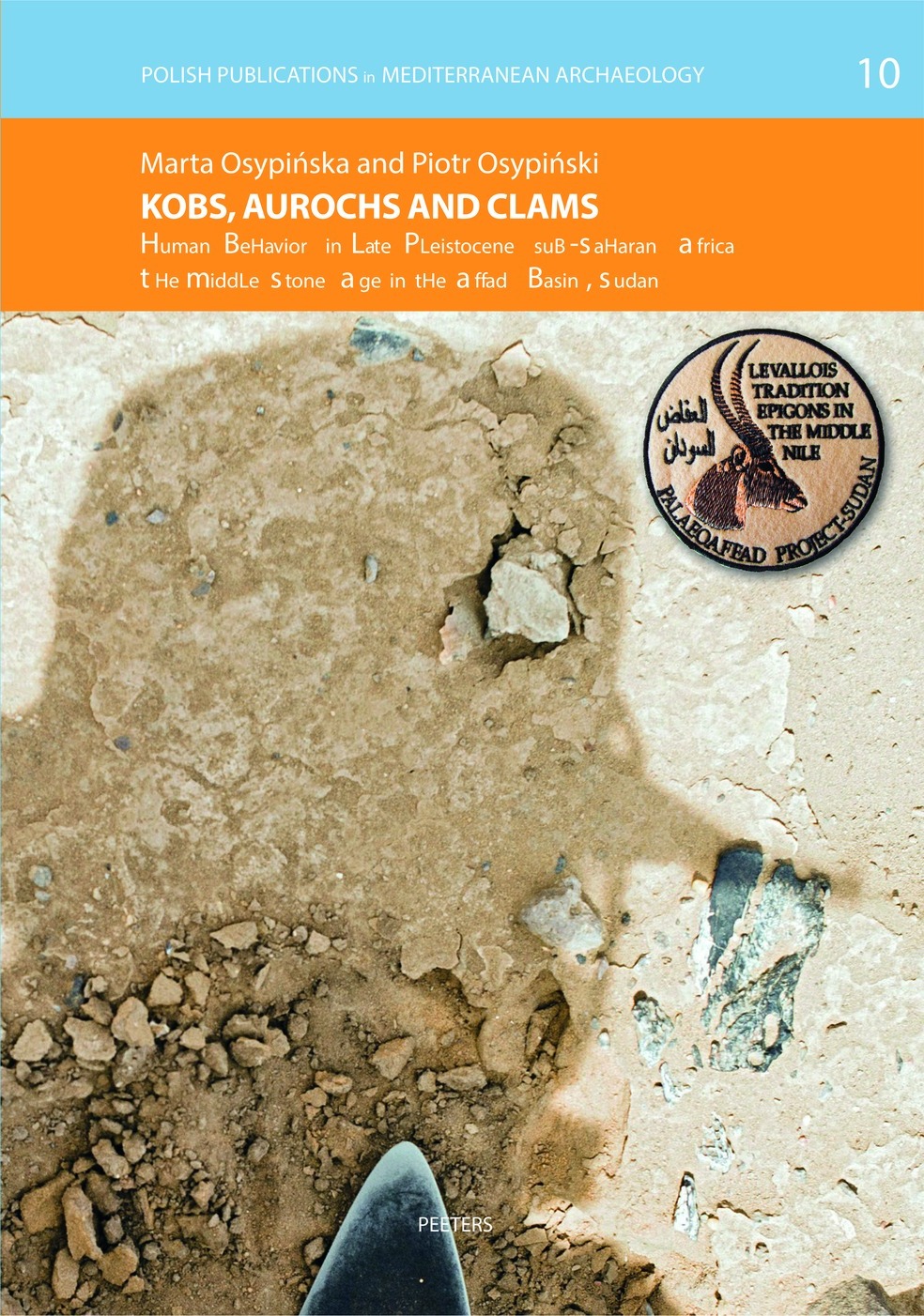
KOBS, AUROCHS AND CLAMS. Human Behavior in Late Pleistocene sub-Saharan Africa. The Middle Stone Age in the Affad Basin, Sudan
A new monograph co-authored by Professor Marta Osypińska of the Institute of Archaeology, University of Wrocław, has just been published. The volume, Kobs, Aurochs and Clams. Human Behavior in Late Pleistocene sub-Saharan Africa. The Middle Stone Age in the Affad Basin, Sudan, summarises years of fieldwork and analytical research carried out by an international team working in northern Sudan.
Kobs, aurochs and clams… even for professional archaeologists specialising in the Middle Stone Age (MSA), these terms may sound enigmatic. Yet it was most likely these very animals that lay at the centre of human activity and subsistence along the Nile during the Late Pleistocene. People focused on hunting and gathering them, developing tools and strategies to do so with increasing efficiency. They used fire, produced stone tools for meat processing, and built wooden shelters and installations – all serving the purposes of hunting kobs and aurochs and collecting clams. Stone by stone, bone by bone, the authors of this publication reconstruct the world of these people, the role of humans within it, and its echoes in the contemporary understanding of human adaptation.
The monograph was designed primarily as a presentation of the rich archaeological record. At the same time, it provides valuable data for the discussion of adaptive capacities among human groups inhabiting north-eastern Africa during the MSA. Behavioural adaptation is presented here as a complex system of interactions between humans as social beings and their environment. The analysis of worked chert pieces offers insights into learning processes through replication, while simultaneously serving to illustrate tool manufacture and use. Preferences in raw material selection for specific tool types also reflect the seasonal accessibility of lithic resources – a pattern mirrored in the diversity of animal protein sources exploited by these communities.
The research conducted by the authors has offered a unique insight into the adaptive behaviour of human groups inhabiting the Affad Basin region during a relatively homogeneous period between 45,000 and 55,000 years ago. Such a focused perspective provides a far more robust foundation for formulating hypotheses about the nature of the MSA than earlier studies based on assemblages considered in isolation, outside their contextual framework.