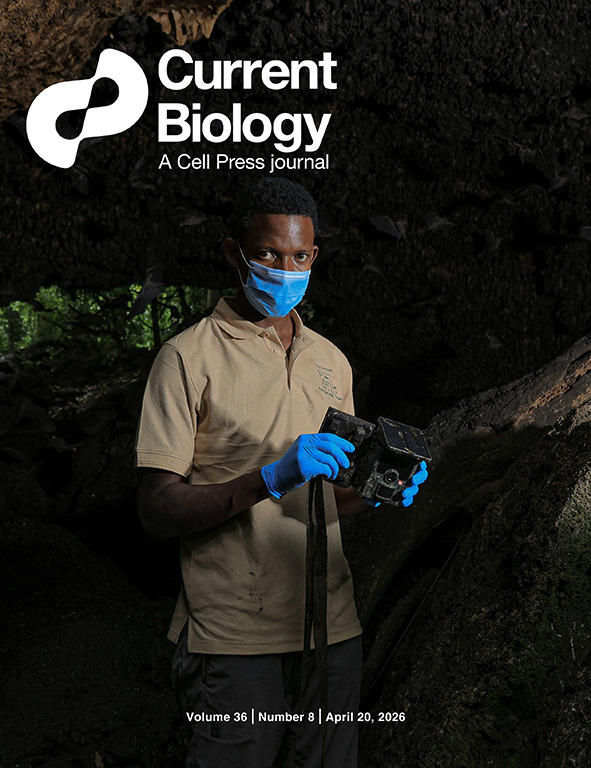
Andrea Picin, Mateja Hajdinjak, Wioletta Nowaczewska, Maarten Blaauw, Alex Bayliss, Helen Fewlass, Timothy J. Heaton, Paula J. Reimer, John Richard Southon, Johannes van der Plicht, Lukas Wacker, Gregorio Oxilia, Rita Sorrentino, Antonino Vazzana, Erica Piccirilli, Stefano Benazzi, Marcin Binkowski, Paweł Dąbrowski, Adrian Marciszak, Paweł Socha, Krzysztof Stefaniak, Marcin Żarski, Andrzej Wiśniewski, Janet Kelso, Jean-Jacques Hublin, Adam Nadachowski, Sahra Talamo; Current Biology, 20 Kwietnia 2026
Application of Multi-Method Dating for Understanding the Gravettian North of Moravia, Central Europe
An article published in Current Biology, co-authored by researchers from the University of Wrocław, including Prof. Andrzej Wiśniewski, provides new insights into Neanderthals from Stajnia Cave. Mitochondrial DNA analyses confirm their identification and reveal broad population connections across Europe.
Mitochondrial DNA analyses confirmed earlier morphological assessments indicating the Neanderthal origin of the material and enabled dating of the finds to approximately 119,700–92,498 years ago.
Comparative analyses with other Neanderthals, Denisovans, and modern humans revealed the closest affinities with populations from Western Europe and the northern Caucasus. These results highlight the high mobility of Neanderthal groups and underscore the importance of present-day Poland as a significant migration corridor.
Particular attention should be paid to the unique character of the Stajnia Cave site. The discovery of remains belonging to several individuals of different ages, as well as the identical mitochondrial DNA of three of them—indicating either the same individual or close maternal kinship—provides rare insight into the social structure of Neanderthals.
DOI: https://doi.org/10.1016/j.cub.2026.03.069
More information about Stajnia Cave can be found in the news section on the University of Wrocław website.