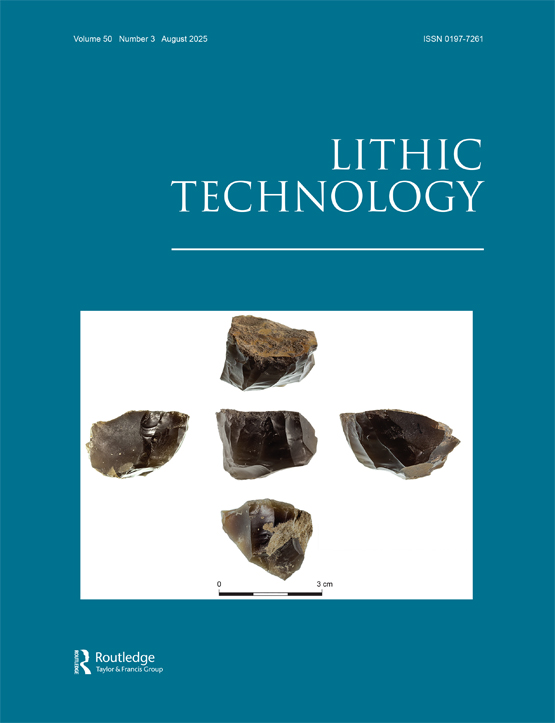
Piotr Osypiński, Marta Osypińska, Marek Chłodnicki, Paweł Wiktorowicz; Lithic Technology, 31 October 2025
Holocene Lithic Traditions on the Middle Nile in Light of New Data from Letti, Sudan
We are pleased to announce a new publication co-authored by Prof. Marta Osypińska, dedicated to the study of early Holocene communities in the Middle Nile Valley. The paper represents an important step towards recognising cultural diversity in this part of Africa around 10,000 years ago.
The authors present the results of analyses of materials from the Letti Desert 2 campsite (8th millennium BC), which reveal a distinct lithic production tradition differing from previously known Mesolithic assemblages of the region. The use of raw materials other than quartz, combined with a characteristic composite tool-making technique, indicates the existence of an independent cultural entity, interpreted by the researchers as proto-pastoral groups. According to the authors, these communities arrived in the Nile Valley from the central Sahel, migrating along wadi systems together with herds of wild or partially domesticated cattle.
The new findings in lithic technology continue the research themes presented earlier this year by Prof. Osypińska in the Journal of Archaeological Science and complement the anthropometric data published in PNAS, to which she also contributed as a co-author. Together, these results strengthen the interpretation of the complexity of migratory and cultural processes in the early Holocene of north-eastern Africa, revealing its mosaic nature and the dynamic interactions between hunter-gatherer groups and emerging pastoral communities.